National Financial Literacy Month: 5 Tips for Kids in 2026

National Financial Literacy Month: 5 Tips for Kids in 2026

April is National Financial Literacy Month, and in 2026, teaching children about money has become more important than ever. With digital wallets, online subscriptions, and instant purchases now part of daily life, many children interact with money long before they understand how it works. But why could this be an issue?

From defaulting on debt, “buy now pay later” overuse, and lack of savings, to vulnerability to scams and overall financial stress, facing some of today’s financial innovations without first gaining an understanding of basic financial literacy can lead to problems.

To help avoid these kinds of pitfalls, we offer five ways to turn everyday moments into meaningful learning experiences which help build skills that evolve over time.

  1. Start money conversations early and keep them practical.
    Financial education doesn’t begin with spreadsheets or investing; it starts with simple, real-life discussions. For younger children, that may mean explaining where money comes from or why saving matters. For older kids, it can include conversations about budgeting, needs versus wants, and how work connects to income. Frequent, age-appropriate dialogue helps demystify money and builds confidence over time.
  2. Give kids responsibility, paired with guidance.
    Allowing children to manage small amounts of money—through allowance, gifts, or earned income—helps them develop decision-making skills. A helpful framework is dividing money into spending, saving, and giving. This approach teaches balance while reinforcing values like discipline and generosity.
  3. Model healthy financial habits at home.
    Children learn from what they observe just as much as what they’re taught. Demonstrating spending, discussing family goals and being open about financial decisions shows kids that money management is a lifelong skill.
  4. Make saving visible and goal-oriented.
    Whether it’s a traditional savings account or a simple goal-based system at home, children benefit from seeing progress over time. In today’s digital world, many parents use digital tools to help track spending and saving. Pairing those tools with clear goals like a bike, charitable donation or a shared family experience helps reinforce delayed gratification and intentional decision-making.
  5. Reinforce learning with trusted educational resources.
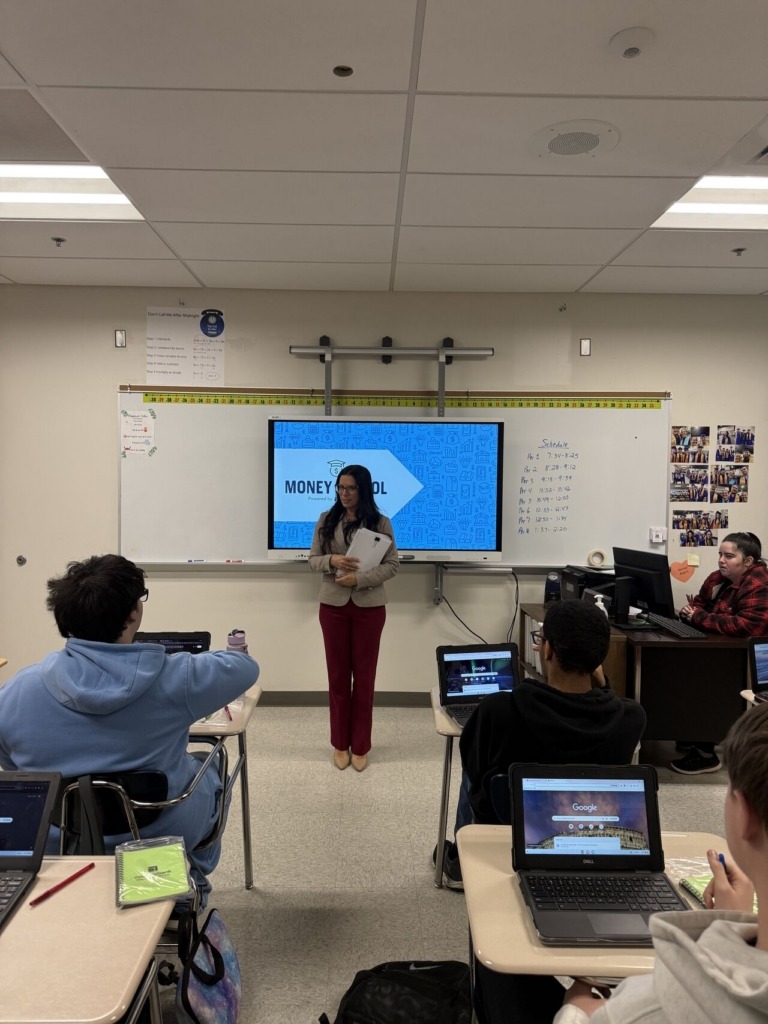
    Many families choose to supplement at-home lessons with structured financial education. Community-based programs like Country Bank’s Money School, along with interactive online tools such as Banzai, use real-life scenarios to help children and teens practice financial decision-making in a relatable, age-appropriate way

Financial literacy isn’t about getting everything right all at once; it’s about building skills that evolve over time. For families in New England, where education and community are deeply valued, giving children practical knowledge and positive experiences today help prepare the next generation to make confident decisions and strong financial habits that will last well beyond childhood.


See More

Related Posts

The owners of Charcut to go in a kitchen with their food

Business Spotlight: Charcut-To-Go – A Unique Experience

At Country Bank we have the opportunity to help a wide variety of entrepreneurs start and grow businesses throughout Massachusetts. […]
Read More

Country Bank supports Quaboag Valley Community Development Corporation with a $10,000 Donation

Country Bank, a full-service financial institution serving Central and Western Massachusetts, announced a $10,000 donation to the Quaboag Valley Community […]
Read More

Business Spotlight: Restrepo Properties – Building Value in MA

At Country Bank, we take special pride in partnering with local businesses that are making a difference in the lives […]
Read More

HOW CAN WE HELP YOU

CUSTOMER SERVICE

Location pin icon

Locations

Experience the difference of exceptional service when you stop by a local banking center.

FIND LOCATIONS
Icon of a woman with a question mark inside a chat bubble.

FAQs

Elevate your understanding with answers to our most common questions.

GET ANSWERS